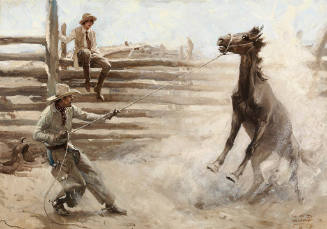
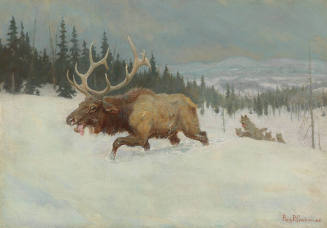
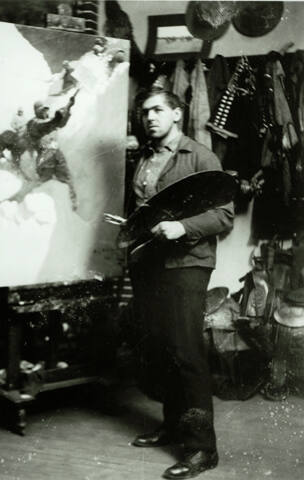
Skip to main contentBiographyLABEL: Newell Convers Wyeth left Massachusetts in 1902 to attend Howard Pyle's school for illustrators in the Brandywine Valley. Following Pyle's advice to know subjects well, Wyeth traveled twice to Colorado and also to Arizona and New Mexico. He quickly gained success, and his early fame was as an illustrator of western themes.
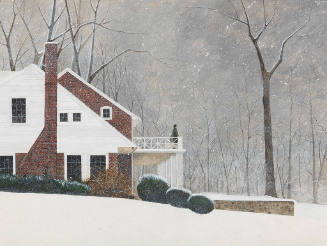
Wyeth settled in Chadds Ford in 1906. He loved the outdoors and his immediate surroundings. He wrote, "I want subjects that are local, subjects that I can paint honestly and conscientiously...." Indeed, the countryside of Pennsylvania, Massachusetts, and Maine appear in his illustrations and his other paintings.
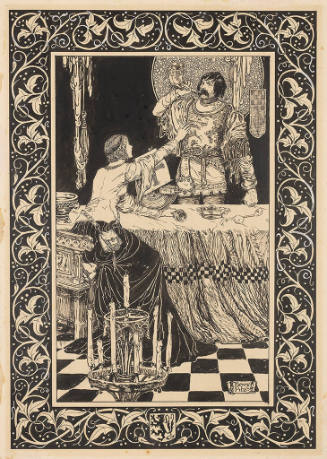
In 1911 Charles Scribner's Sons commissioned Wyeth to illustrate Stevenson's novel, Treasure Island. His vision and ability brought this adventure story to life for generations of readers. During his lifetime he completed more than a thousand book and magazine illustrations including images for such classics as The Black Arrow, Kidnapped, Robin Hood, The Boy's King Arthur, and The Mysterious Island.
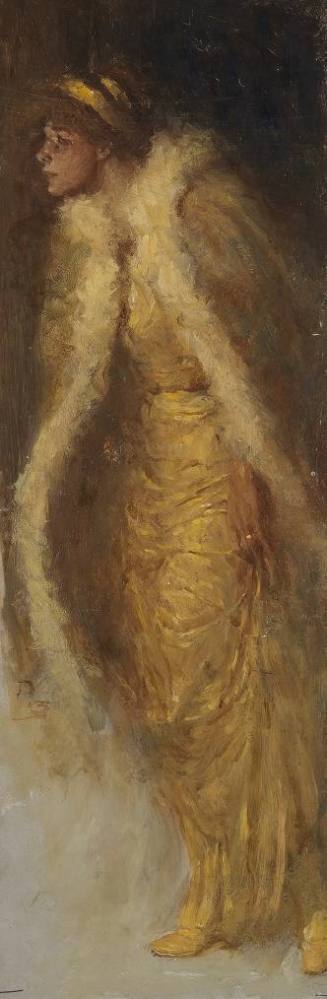
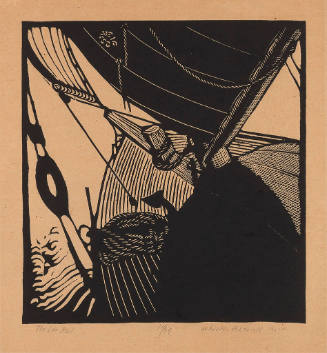
Choosing to illustrate dramatic moments not fully described in text, Wyeth employed close viewpoints, high contrasts of light and shadow, and strong diagonal elements. He often experimented with media, technique and style, at times adopting the bold colors and broad brush strokes of impressionism and late in life painting in great detail with egg tempera.
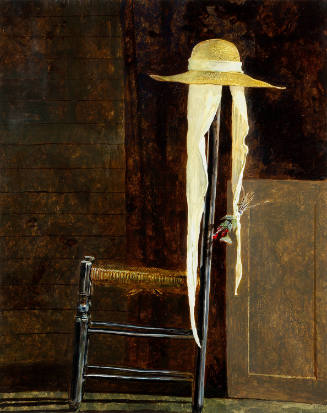
Frustrated by his inability to escape the demands and limitations of illustration, throughout his life he painted landscapes, still lifes and portraits, work he loved. But he never completely broke away from illustration.
N.C. Wyeth's sudden death in 1945 had a profound effect on his family. That event, as well as his art, did much to shape artists in the next two generations of Wyeths.



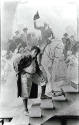

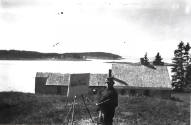
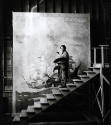
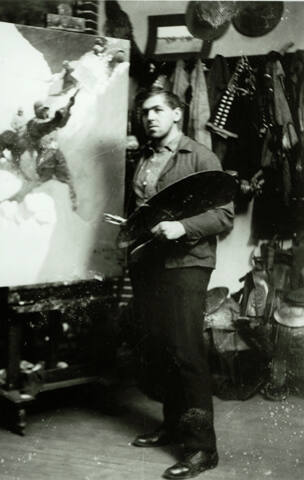
N.C. Wyeth
American, 1882 - 1945
Wyeth settled in Chadds Ford in 1906. He loved the outdoors and his immediate surroundings. He wrote, "I want subjects that are local, subjects that I can paint honestly and conscientiously...." Indeed, the countryside of Pennsylvania, Massachusetts, and Maine appear in his illustrations and his other paintings.
In 1911 Charles Scribner's Sons commissioned Wyeth to illustrate Stevenson's novel, Treasure Island. His vision and ability brought this adventure story to life for generations of readers. During his lifetime he completed more than a thousand book and magazine illustrations including images for such classics as The Black Arrow, Kidnapped, Robin Hood, The Boy's King Arthur, and The Mysterious Island.
Choosing to illustrate dramatic moments not fully described in text, Wyeth employed close viewpoints, high contrasts of light and shadow, and strong diagonal elements. He often experimented with media, technique and style, at times adopting the bold colors and broad brush strokes of impressionism and late in life painting in great detail with egg tempera.
Frustrated by his inability to escape the demands and limitations of illustration, throughout his life he painted landscapes, still lifes and portraits, work he loved. But he never completely broke away from illustration.
N.C. Wyeth's sudden death in 1945 had a profound effect on his family. That event, as well as his art, did much to shape artists in the next two generations of Wyeths.
Person TypeIndividual
Terms
American, 1821 - 1888
American, 1878 - 1938