Skip to main contentBiographyMarsh Reginald (American, 1898-1954)
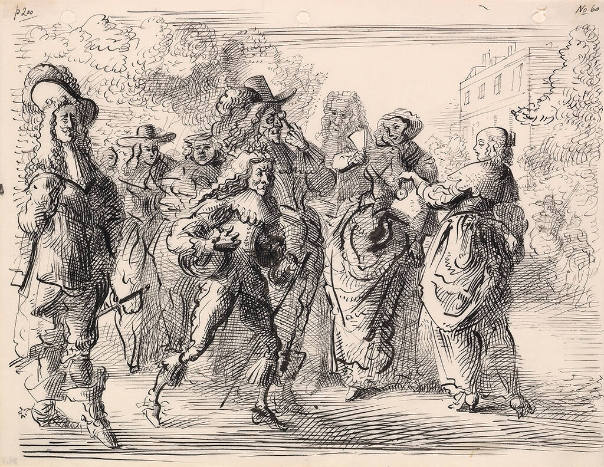
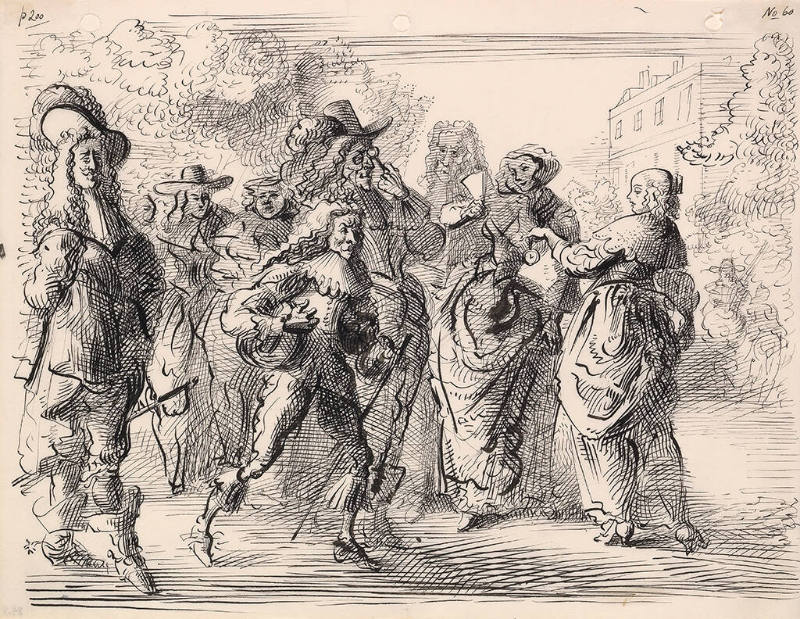
Born in 1898 in Paris, Marsh grew up in New Jersey. In 1920 he graduated from Yale and continued his studies at the Art Student League of New York under the tutelage of John Sloan, George Luks and Kenneth Miller Hays. Throughout the 1920s Marsh supported himself as an illustrator for the New York Daily News, Harper’s Bazaar and many other periodicals. Between 1922 and 1925 he produced more than 4,000 illustrations for the Daily News alone.
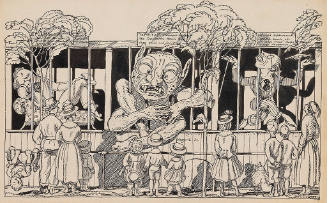
Though a great admirer of Peter Paul Rubens and Eugène Delacroix, Marsh used contemporary subject matter in his work to depict urban life in all its tawdry aspects. His fascination with the human crowd was entirely individual for an artist of Marsh’s time, best exemplified in his unforgettable portrayals of Coney Island Beach, his crowded subways, and Bowery bums. Though defined as a second generation Ashcan School artist in the vein of George Luks and John Sloan, it is the Depression-era work of Reginald Marsh which is best remembered and admired. Marsh remains the most significant artistic figure of his genre and has been the subject of major retrospectives.
"Behind its public face, Reginald Marsh’s art is determined by a singular and personal vision – a vision that took him to the past and to the present. Indeed, while at first glance his paintings and prints evoke New York in the thirties, with its tawdry amusement parks and brazen floozies, at another glance they evoke scenes from the art historical past, Last Judgements and Rapes of the Sabine Women. At some point the Bowery, burlesque, and beach ceased to be real places for Marsh. Within the crowds lurked a limited set of characters that endlessly played out his more private themes: men and women, spectator and performer, seeing and not seeing. These themes, which fully emerged in the 1930s, occupied him for the rest of his life and kept him sketching, photographing, printmaking and painting incessantly. Only by exploring both the social and personal levels of his art can we finally see Reginald Marsh’s New York." (Cohen, Marilyn, Reginald Marsh’s New York, Whitney Museum of American Art, New York, 1983).
[Taken from the internet web site of Comenos Fine Arts, Boston, www.comenosfinearts.com, 2/7/2000 --jag]


Reginald Marsh
American, 1898 - 1954
Born in 1898 in Paris, Marsh grew up in New Jersey. In 1920 he graduated from Yale and continued his studies at the Art Student League of New York under the tutelage of John Sloan, George Luks and Kenneth Miller Hays. Throughout the 1920s Marsh supported himself as an illustrator for the New York Daily News, Harper’s Bazaar and many other periodicals. Between 1922 and 1925 he produced more than 4,000 illustrations for the Daily News alone.
Though a great admirer of Peter Paul Rubens and Eugène Delacroix, Marsh used contemporary subject matter in his work to depict urban life in all its tawdry aspects. His fascination with the human crowd was entirely individual for an artist of Marsh’s time, best exemplified in his unforgettable portrayals of Coney Island Beach, his crowded subways, and Bowery bums. Though defined as a second generation Ashcan School artist in the vein of George Luks and John Sloan, it is the Depression-era work of Reginald Marsh which is best remembered and admired. Marsh remains the most significant artistic figure of his genre and has been the subject of major retrospectives.
"Behind its public face, Reginald Marsh’s art is determined by a singular and personal vision – a vision that took him to the past and to the present. Indeed, while at first glance his paintings and prints evoke New York in the thirties, with its tawdry amusement parks and brazen floozies, at another glance they evoke scenes from the art historical past, Last Judgements and Rapes of the Sabine Women. At some point the Bowery, burlesque, and beach ceased to be real places for Marsh. Within the crowds lurked a limited set of characters that endlessly played out his more private themes: men and women, spectator and performer, seeing and not seeing. These themes, which fully emerged in the 1930s, occupied him for the rest of his life and kept him sketching, photographing, printmaking and painting incessantly. Only by exploring both the social and personal levels of his art can we finally see Reginald Marsh’s New York." (Cohen, Marilyn, Reginald Marsh’s New York, Whitney Museum of American Art, New York, 1983).
[Taken from the internet web site of Comenos Fine Arts, Boston, www.comenosfinearts.com, 2/7/2000 --jag]
Person TypeIndividual
Terms
- illustrators