Indian Hanna
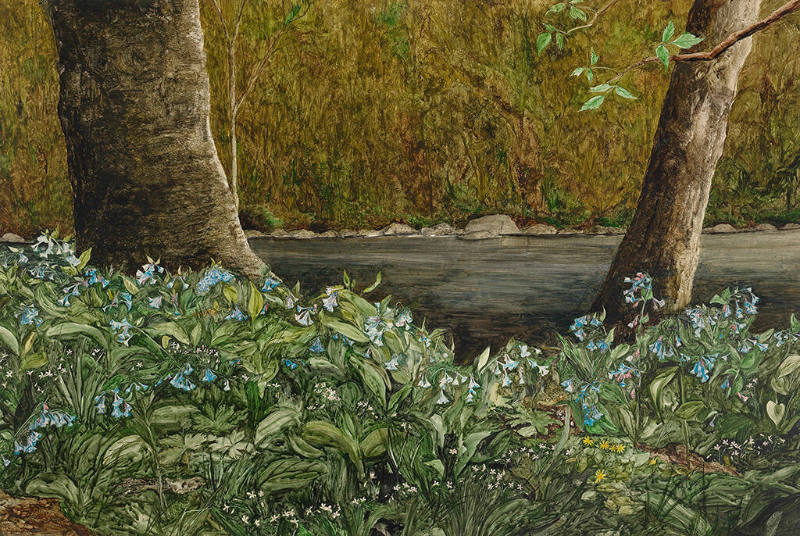
George Weymouth derived great inspiration from the land along the Brandywine and was particularly adept at painting the small details of the area’s natural foliage. In Indian Hanna, the blooming mass of bluebells in the foreground is linked with the life of Hanna Freeman (1730–1802), long fabled to be the last Native American in Chester County. Despite the historical inaccuracy, the death of the presumed last of the Lenni Lenape people emboldened Quaker settlers to claim tribal lands along the Brandywine for themselves, ending a treaty made between William Penn and the Indigenous inhabitants of the area.
The Virginia bluebells pictured here are a type of native wildflower referred to as a “spring ephemeral.” Named for their short, early-season bloom time, these flowers are some of the first to appear each spring.
Freeman lived most of her life in what is now Kennett Square, where a historical marker still commemorates her life. According to local traditions, she spread wildflower seeds throughout the region and these sweet-scented bluebells will ever grow on the site of her grave.