Leo Dillon
Lionel John Dillon, better known as Leo Dillon, was born in the East New York section of Brooklyn, New York, in 1933, just 11 days before his future wife and collaborator, Diane, would be born on the other side of the country. Dillon's parents, immigrants from Trinidad, encouraged his artistic talent, as did his first mentor, a friend of his father named Ralph Volman, who gave young Leo both criticism and support. Dillon trained for a commercial art career at New York City's High School of Industrial Design, and then enlisted in the U.S. Navy in order to be able to attend college on the G.I. Bill.
In 1953, on the advice of a high school teacher, Benjamin Clements, Dillon entered Parsons School of Design rather than the more commercially oriented Pratt Institute. It was at Parsons that he met Diane Sorber, a fellow student.
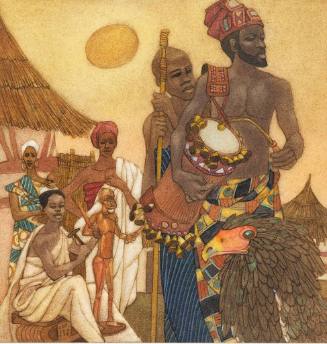
Leo and Diane Dillon first met at Parsons School of Design and competed against one another while each believed the other's work was superior. Competition led to companionship and after graduation they married. They began working together producing what they refer to as the "Third artist" through their collaborations. When working on an illustration, they pass it back and forth adding and improving until the illustration is complete - creating a unique blend that is different from anything they would have produced individually. Their many books are in a variety of media, making each book visually different from any other. This partnership has spanned more than fifty years and resulted in two Caldecott Medals - for Ashanti to Zulu and Why Mosquitoes Buzz in People's Ears - four New York Times Best Illustrated Awards, four Boston Globe/Horn Book Awards, two Coretta Scott King Awards, two Coretta Scott King Honors, and the Society of Illustrators Gold Medal.
http://lookingglassreview.com/html/leo_and_diane_dillion.html