The Drowning
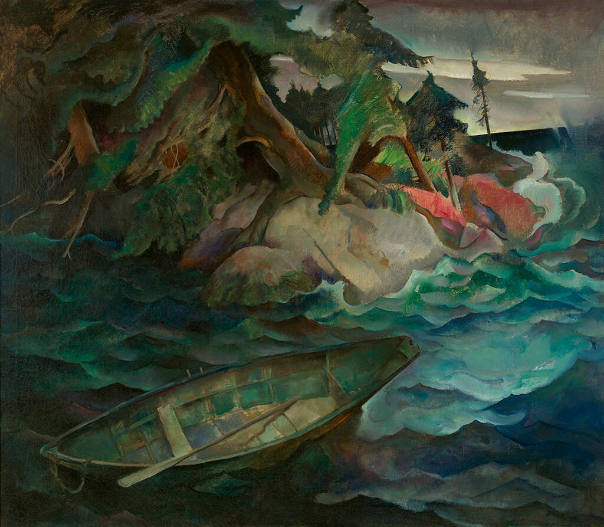
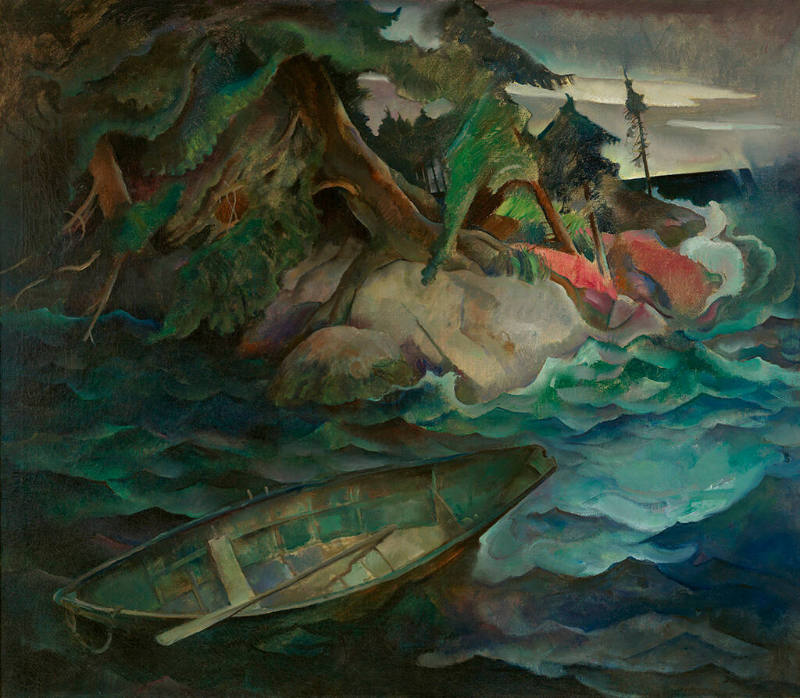
N.C. Wyeth’s experimental expressionist style found a well-matched subject in his painting The Drowning. The impossibly tilted dory in the foreground completes the story begun by the title of the painting. Wyeth made the work in response to the death of sixteen-year-old Douglas Anderson, the Wyeth family’s friend and neighbor in Port Clyde, Maine. Anderson disappeared while lobstering in September 1935, after the Wyeths had returned to Chadds Ford for the winter. Months later, Anderson’s father and younger brother Walt, found the boy’s body floating in the water off Horse Point—a rocky, tree strewn landscape very similar to that which is rendered by Wyeth. His stormy sea kicks up sharp-edged waves tossing the empty boat, which itself played a painful role in the tragedy: Anderson was not in the sturdy dory represented by Wyeth, but in a much more flimsy skiff, a craft sadly unsuited for his task.