Skip to main content



N.C. Wyeth
(American, 1882 - 1945)
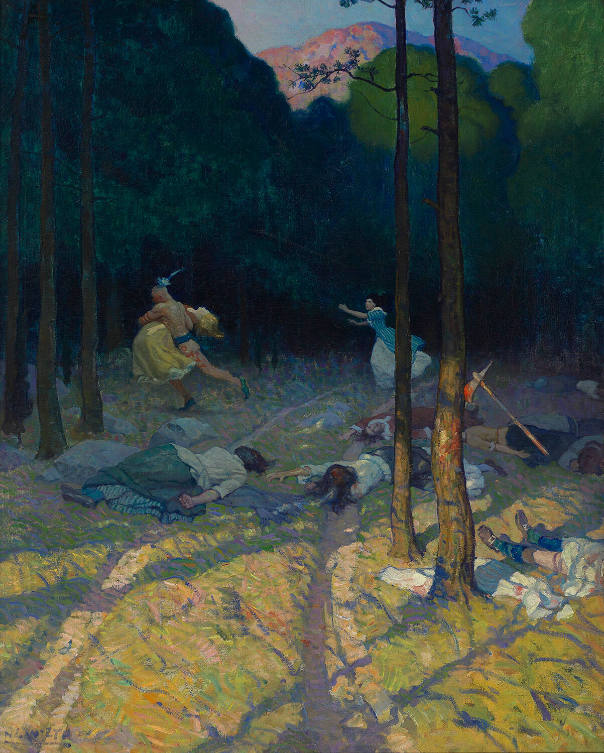
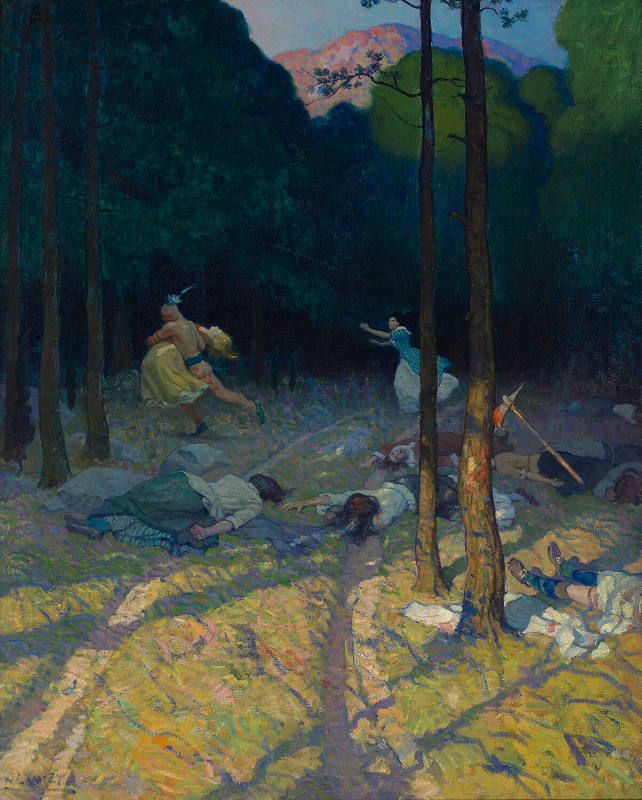
Magua Captures Alice He hesitated a moment; and then catching the light and senseless form of Alice in his arms, the subtle Indian moved swiftly across the plain toward the woods
1919
39 7/8 × 32 1/8 in. (101.3 × 81.6 cm)
76.14.1
Gift of Richard S. du Pont, 1976
In preparation for this commission, Wyeth read and marked an edition of The Last of the Mohicans published by A. L. Burt (Brandywine River Museum of Art, NCWS.95.4334). He also visited Glens Falls, New York, the setting of the story. In addition to photographs he took of the locale, he also may have used stereoscope cards as image resources; six cards depicting scenery in Glens Falls were found in his studio. But Wyeth used his experiences and visual resources as a reference for color and atmosphere only. He eschewed a depiction of the actual massacre itself and chose to focus on the abduction of Alice, her crowning blonde hair the one light in the actual and metaphorical darkness of the forest.
Not On View