Monologue
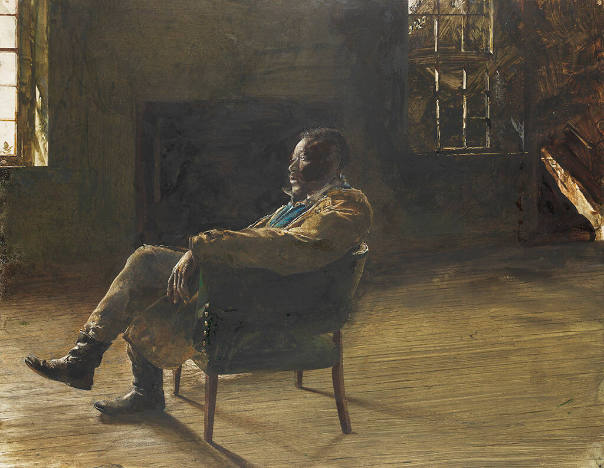
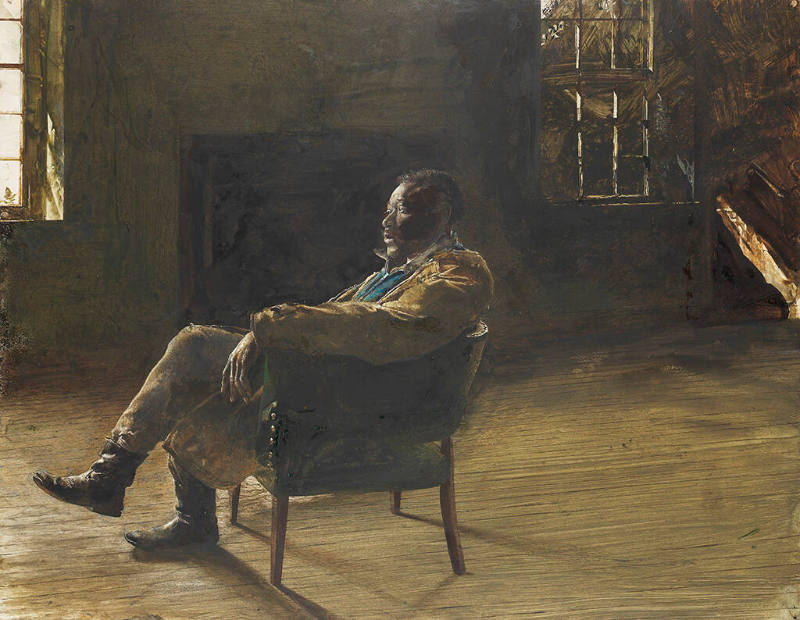
The title of this portrait of Willard Snowden refers to what Andrew Wyeth said was the loquaciousness of his sitter when posing in his studio. Surrounded by emptiness in the large, barren room just outside Wyeth’s studio, he seems to be delivering a great speech to an unseen audience. Texture and light and shadow play key roles in this painting, with the light focused on Snowden’s expressive face and hands contrasted against the darkness of the room, creating a dramatic scene as if from a stage play.
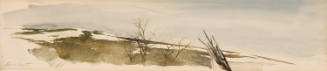
Wyeth began exploring the use of drybrush painting in the 1940s and continued to use it to great advantage through the rest of his career. Drybrush is a watercolor technique in which the artist squeezes most of the water out of the brush after dipping it in color, leaving behind mostly dry pigment. This process allowed Wyeth to build up texture by brushing the dry pigment layer-upon-layer over broader washes of color, almost like weaving. This method paralleled Wyeth’s controlled painting in tempera in some ways, but he also said he used drybrush with abandon "when my emotion gets deep enough into a subject."