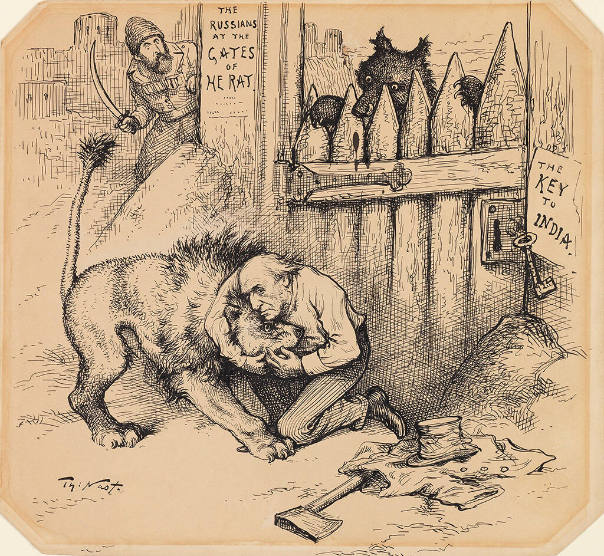

Let Him Go (The Russians at the Gate of Herat)
Captioned: "Let him go! We say it’s a case for preparation."
Thomas Nast was the first and most influential political cartoonist in America. Between 1869 and 1872, he made journalistic history for his relentless crusade against the corruption of William Marcy Tweed and New York City’s government. Virtually unchallenged and protected by his henchmen whom Tweed placed in power and the police department, the Tammany Boss and his cronies bilked citizens out of millions. Nast’s searing cartoons chronicled Tweed’s abuses and eventually broke his power. Headed toward downfall, Tweed cursed "them damned pictures" for their ability to sway public opinion.
Thomas Nast is best known for his cartoons that brought down New York City’s notoriously corrupt government, but he also satirized many other national and international political and social events of his day. In The Russians at the Gate of Herat, Nast takes on Britain’s Prime Minister William Gladstone, seen restraining the British lion for his inaction toward Russia’s advancement on India through Afghanistan.